Building the New Delta Worms Wormery: From Food Scraps to Market-Ready Worms
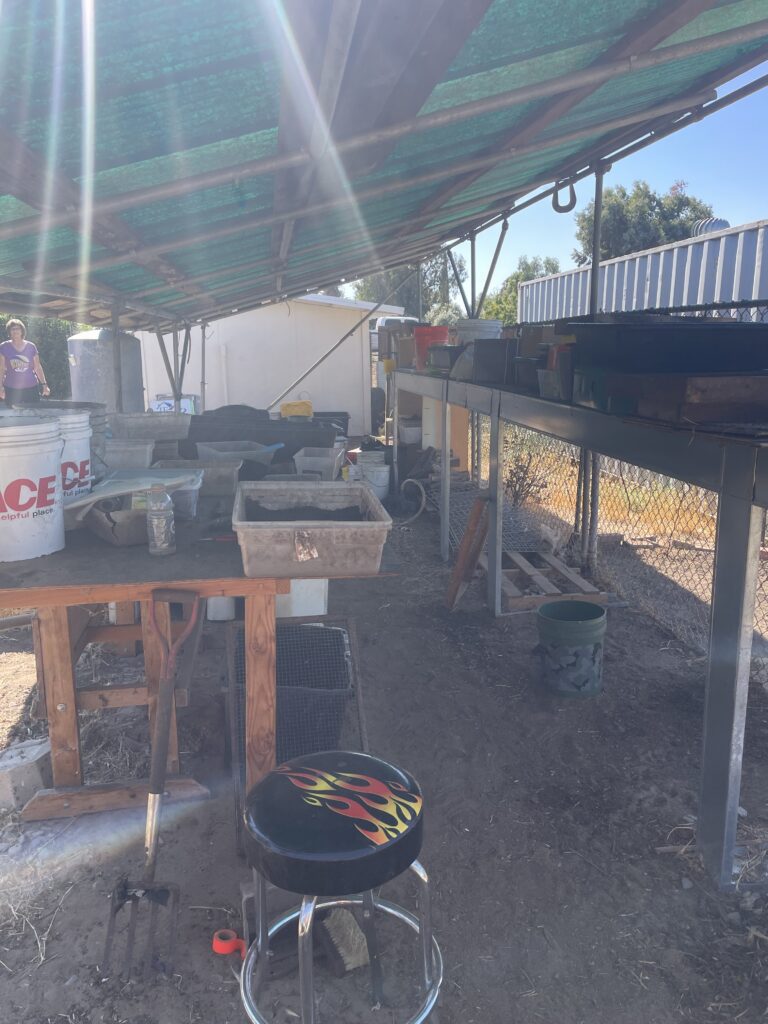
When Robin and I moved to the Oakley property, one of our biggest priorities was establishing a new home for Delta Worms.
The new wormery is now taking shape beneath the property’s solar-panel structure, which provides a large, protected work area.
This is much more than a place to keep worms. We are building a system that will eventually take food scraps and other organic materials through every stage—from preparing worm food to breeding, growing and holding market-ready composting worms.
Our long-term goal is to develop a dependable system capable of producing approximately 20 pounds of mature worms for sale each week. Reaching that goal will take time, careful observation and plenty of adjustments along the way.
Starting With Better Worm Food
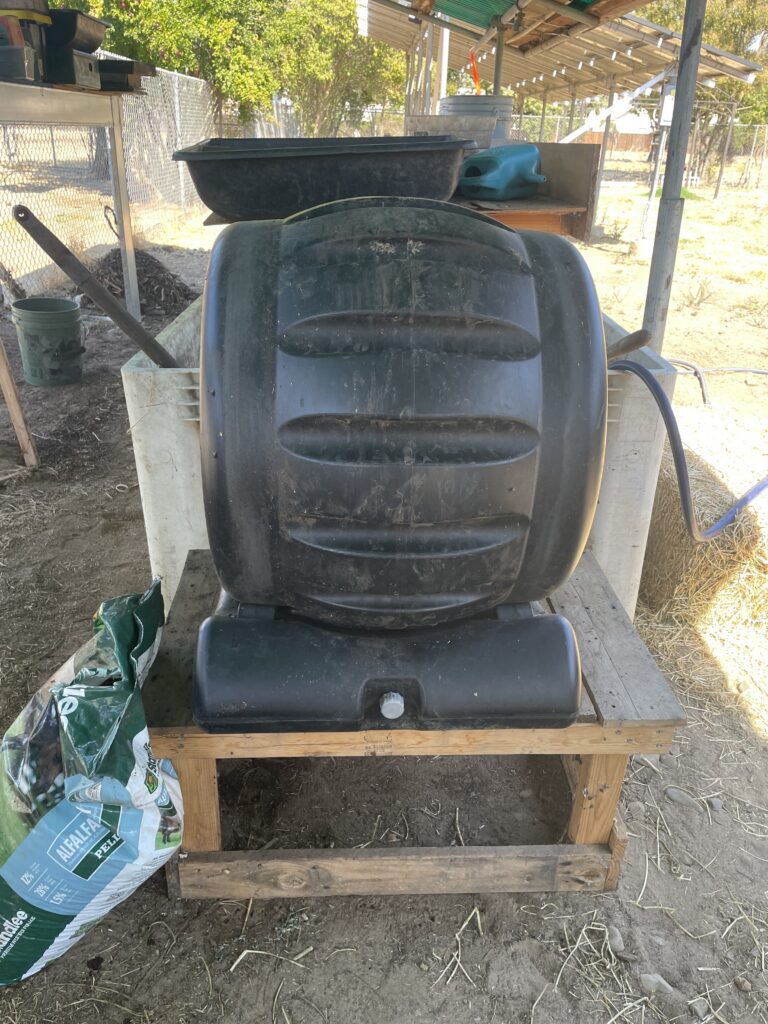
The first step happens before the material ever reaches the worms.
We recently added a compost tumbler to the wormery. It will be used as a pre-composter, allowing us to begin breaking down food scraps in a sealed container before feeding them to the worms.
The starting mixture includes screened arbor mulch, food scraps and small amounts of nutrient-rich ingredients such as cornmeal, alfalfa pellets and granular molasses.
As the material tumbles and begins decomposing, it should become softer and easier for the worms and microorganisms to process. Pre-composting also gives us a way to handle food scraps while reducing odors and concerns about rodents.
The goal is not to produce finished compost in the tumbler. The goal is to produce a moist, biologically active material that can serve as a consistent “superfood” for the worms.
We will gradually fill the tumbler to about three-quarters full. Once the system develops a rhythm, we should be able to remove partially composted material for the worm beds while adding new material to the tumbler.
Establishing the Breeding Bed
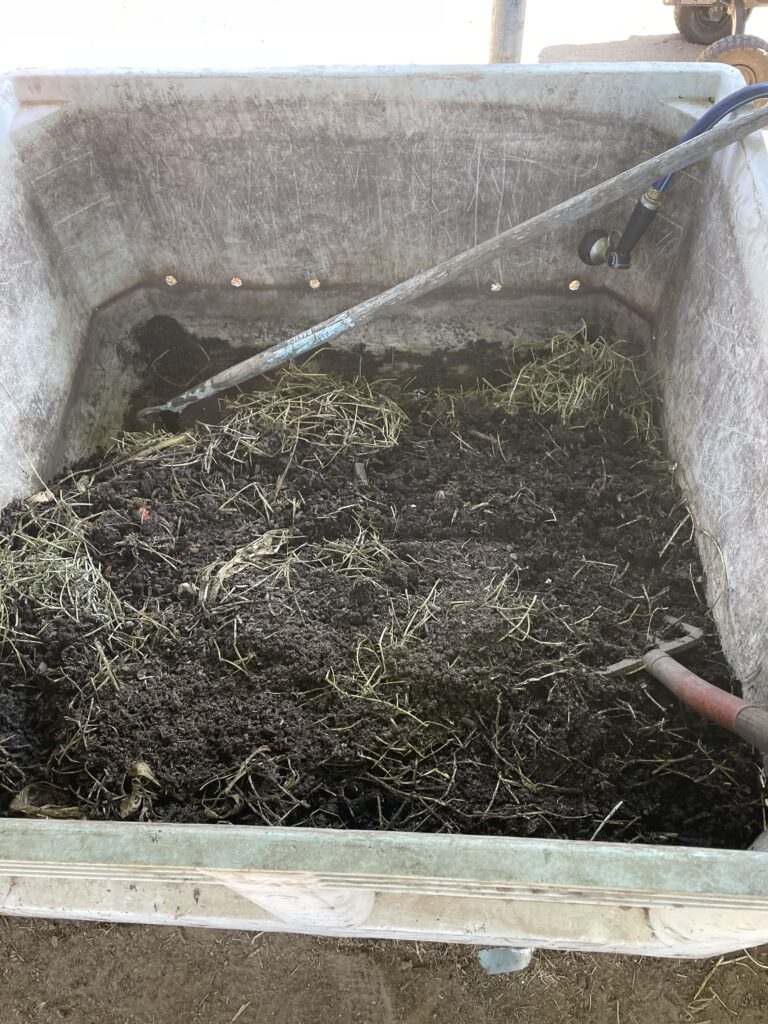
The next step is the breeding bed.
The breeding bed has approximately 16 square feet of surface area and is being designed to hold about eight pounds of mature composting worms. Its primary purpose will be reproduction rather than growing worms to market size.
Adult worms will remain in this bed, where they will feed, reproduce and deposit cocoons into the bedding.
The breeding bed will be divided into sections. Approximately every three weeks, we plan to screen a portion of the material to separate the mature worms from the bedding and cocoons.
The mature worms will be returned to the breeding bed, while the screened material and cocoons will move into the nursery.
This will not be a perfectly timed process at first. Worm cocoons can hatch at different rates depending on temperature, moisture and other conditions. We will watch the system closely and adjust the screening schedule based on what we observe.
Giving the Cocoons a Nursery
The nursery will provide a protected place for the cocoons to hatch and the smallest worms to begin growing.
Moving the screened bedding into a separate nursery serves two purposes. It allows the adult worms to continue reproducing in the breeding bed, and it gives the hatchlings access to food without competing with a large population of mature worms.
The nursery stage may not look very active from the surface. Newly hatched worms are extremely small, and many will remain hidden within the bedding.
Patience will be important. The worms need time to hatch, begin feeding and grow large enough to move into the next stage.
Moving Into the Grow-Out Area
After the young worms become established, they will move into the grow-out system.
This will eventually be the largest part of the wormery, with the potential to provide approximately 500 square feet of growing area. The purpose of these beds is to give juvenile worms the space, moisture and nutrition needed to reach market size.
Managing the grow-out area will involve more than simply adding food. We will need to monitor:
- Moisture levels
- Bedding depth
- Population density
- Food consumption
- Temperature
- Worm size and health
Overcrowding can slow growth, while overfeeding can cause odors, heat and anaerobic conditions. Finding the right balance will be one of the most important lessons as the wormery develops.
Holding Mature Worms for Market
Once the worms reach market size, they will move into separate holding beds.
These beds will contain mature worms that are ready to be screened, weighed and packed for customers. Keeping market-ready worms separate from the breeding and grow-out populations should make filling orders more dependable.
The holding beds will also give the worms time to stabilize before shipping. During this stage, we can monitor their condition and make sure they are active, healthy and ready for the trip to their new homes.
When fully developed, the wormery may require a total population of approximately 400 pounds of worms across the breeding, nursery, grow-out and holding areas. That is a design estimate—not our current population—and it will be refined as we collect actual production information.
Building a Rhythm
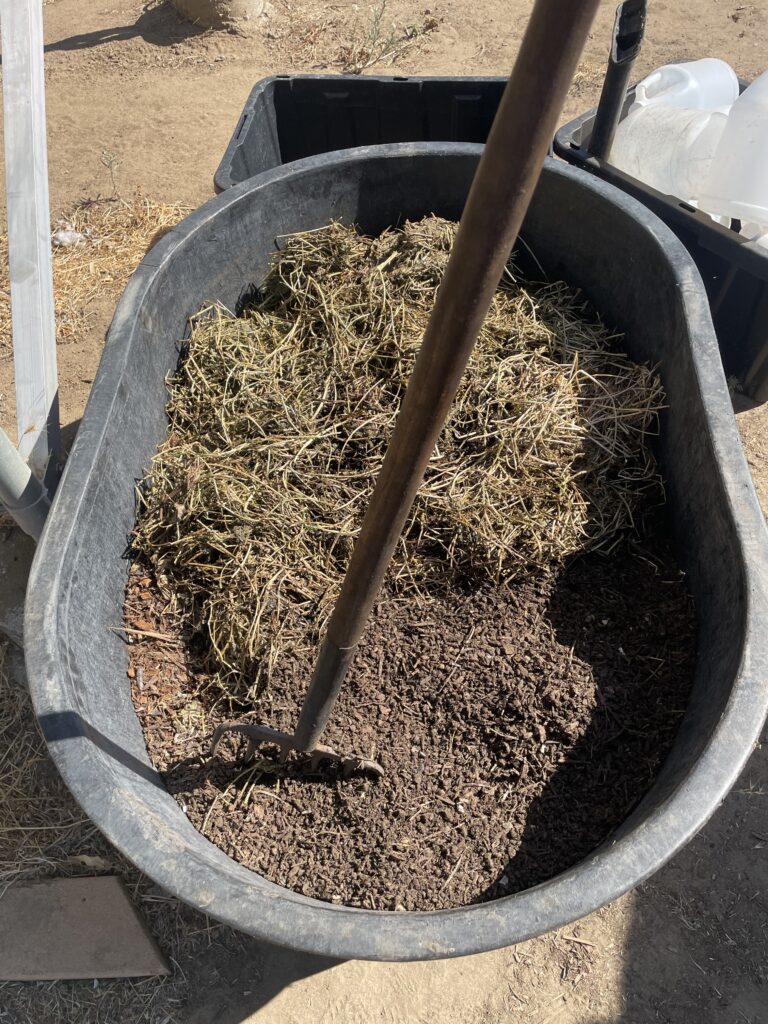
The entire system follows a simple progression:
Pre-compost → Breed → Hatch → Grow → Hold → Sell
The concept is straightforward, but creating a dependable weekly production rhythm will take time.
Worms do not grow according to a business calendar. Their reproduction and growth are affected by temperature, moisture, available food, bedding conditions and population density.
That means our first year will involve plenty of measuring, learning and adjusting. We will track how much material the worms consume, how quickly the cocoons hatch, how long the worms take to reach market size and how much growing space is actually required.
The system shown in these photographs is only the beginning. Beds will be labeled, the work area will become more organized, and additional holding space will be added as the worm population grows.
A New Chapter for Delta Worms
The new Oakley wormery represents an important step forward for Delta Worms.
We are rebuilding after the move, restoring our worm population and continuing the development of our Oakley property to support future customer orders. At the same time, we are trying to develop a practical model that uses local organic materials, produces valuable worm castings and helps more people begin composting at home.
There will undoubtedly be changes along the way. Some ideas will work exactly as planned, while others will need to be redesigned.
That is part of the story.
We will continue sharing the wormery’s development—from the first breeding bed to the day the full production system finds its rhythm.
Have you ever built a worm bin or tried raising composting worms? Let us know what worked—and what you learned—in the comments.
Update: The System Is Working
I recently removed some partially composted material from the pre-composter and placed it in the breeding bin. In less than two days, the worms had moved into the material and were actively feeding. That is an encouraging early result—the pre-composter is beginning to produce the rich, worm-ready feedstock I designed it to create.