Using Compost and Worm Castings to Build Healthy Soil
Today was a productive soil-building day at the new Delta Worms property in Oakley.
We are using compost and worm castings to begin restoring two areas: the front lawn and Robin’s new herb garden.
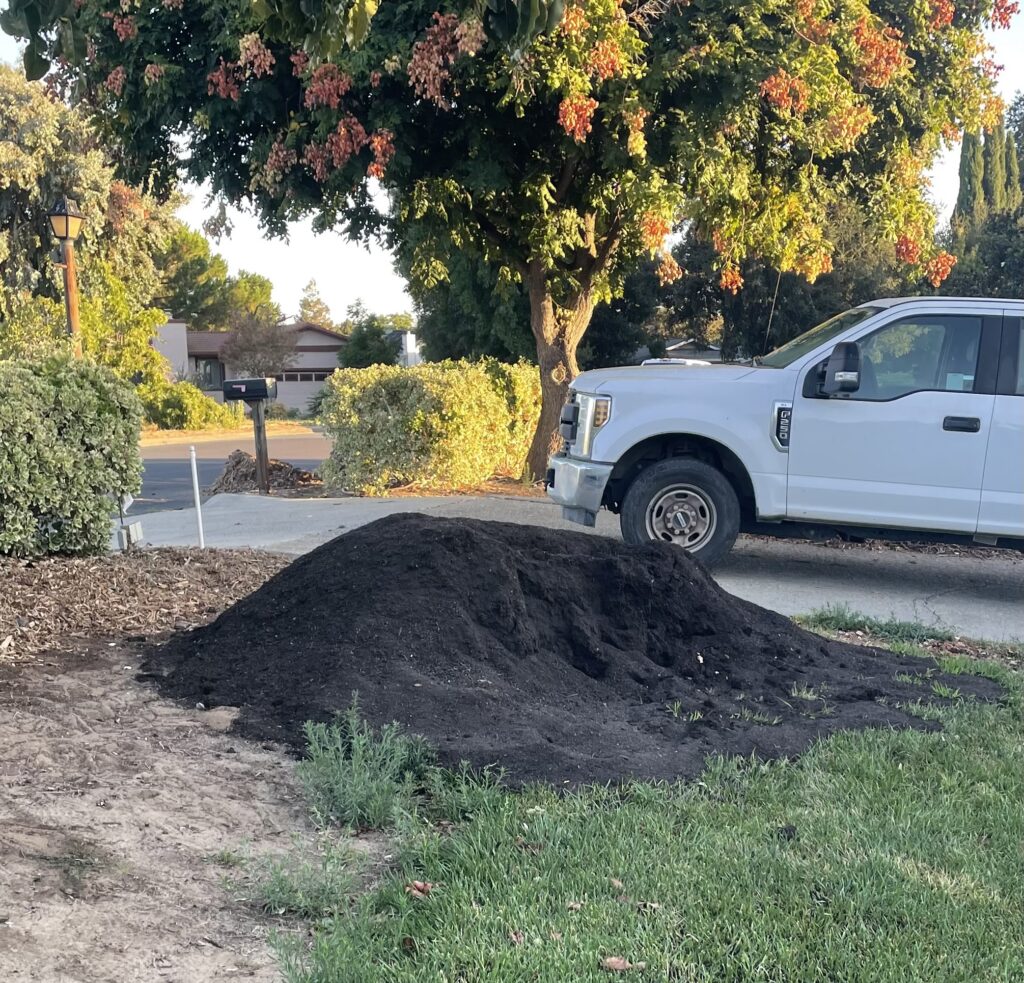
The landscaping here has been neglected, and our sandy soil dries quickly in the summer heat. Rather than reaching first for a quick fertilizer, we are beginning with something more basic: rebuilding the soil with compost, worm castings and mulch.
Top-Dressing the Lawn With Compost
Our first project was spreading compost over the front lawn. The grass has already begun responding to regular watering, but water alone will not correct the underlying soil conditions.
A light compost top-dressing can add organic matter, support soil biology and help sandy soil retain more moisture. We spread the compost across the lawn, worked the heavier patches into a thinner layer and watered it deeply.
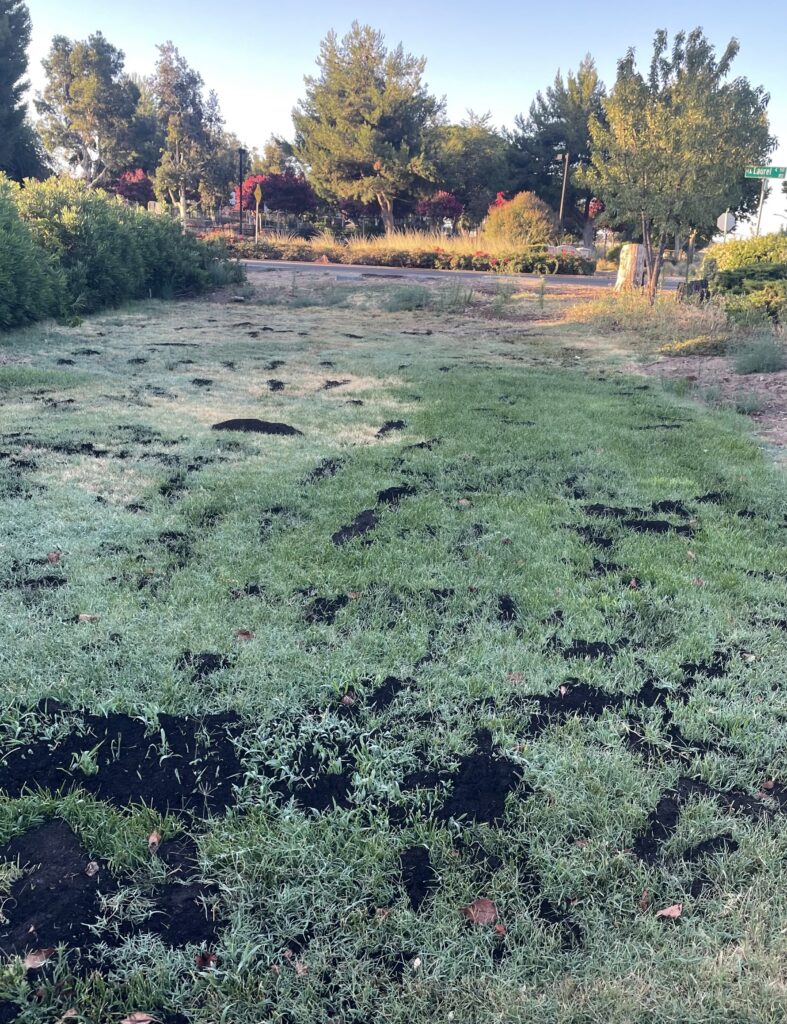
The compost does not need to bury the grass. A thin layer that settles between the grass blades and reaches the soil surface is enough to begin the improvement process.
We do not expect an overnight transformation. Our goal is to watch how the lawn responds over the coming weeks as the compost settles into the soil.
Building the Herb Garden
We also worked on Robin’s herb garden.
One feature we especially liked about this property is the backyard’s easterly exposure. The herb garden receives morning sunlight followed by afternoon shade—an excellent combination during Oakley’s hot summers.
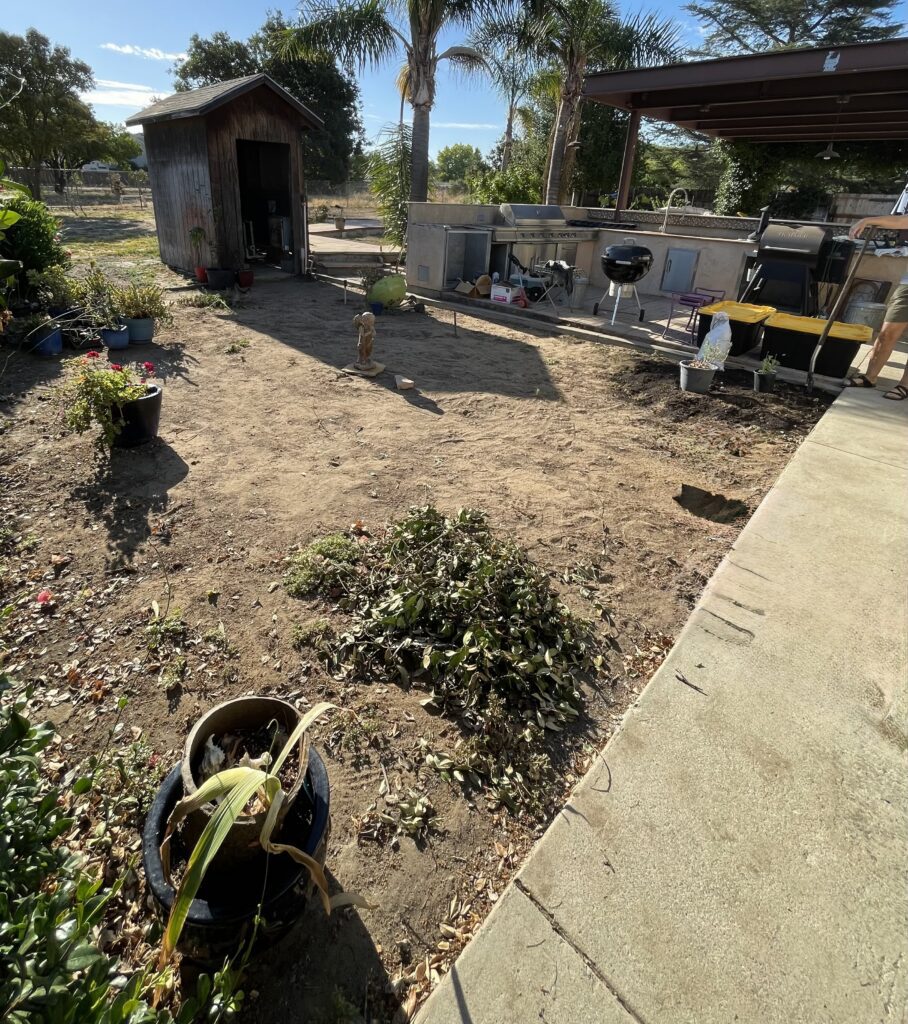
The garden received worm castings followed by compost, with mulch placed on top. Each material has a different job:
- Worm castings provide a gentle source of plant nutrients and beneficial biology.
- Compost adds organic matter and helps improve the soil.
- Mulch protects the soil surface, reduces evaporation and helps moderate soil temperature.
After building the layers, we watered the garden deeply to settle everything into place.
Monitoring the Garden Before Planting
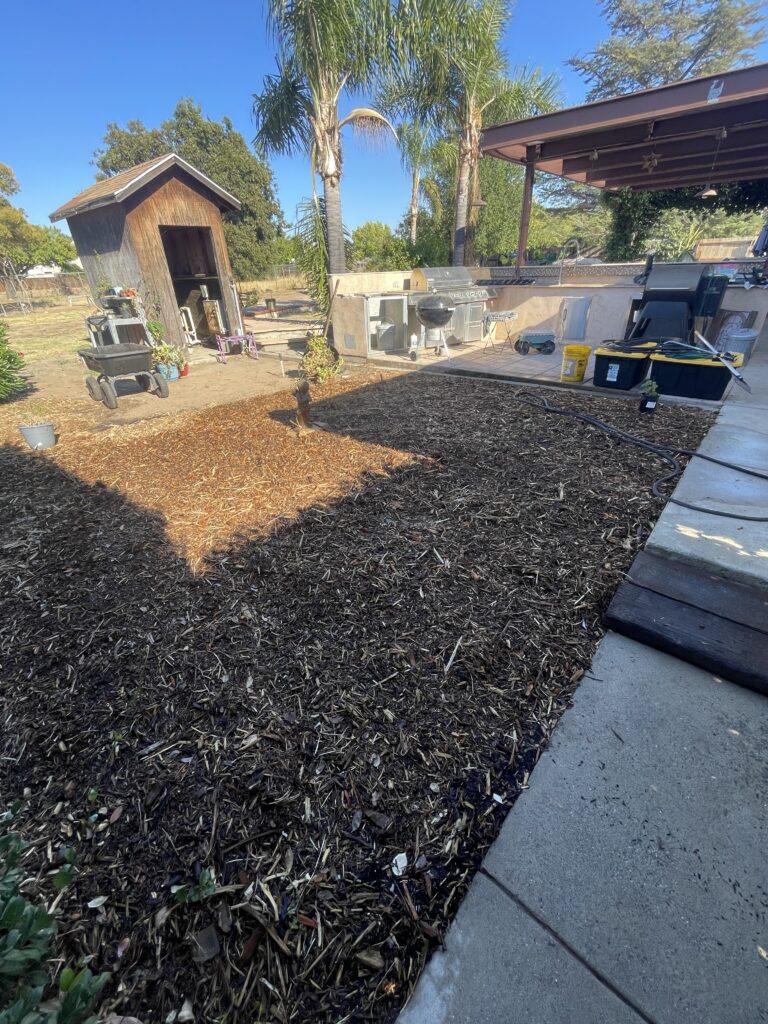
With temperatures approaching 100°F, we are not rushing to plant. We plan to place a thermometer in the garden bed and monitor the temperature beneath the mulch. This will help us understand how effectively the mulch, moisture and afternoon shade protect the soil from extreme heat.
We may wait until September to begin planting. That gives the compost, worm castings and existing soil time to come together while the soil biology becomes more active and established.
During that waiting period, we will continue monitoring the bed’s temperature and moisture. The goal is not simply to grow herbs—it is to create a living system that supports healthy plants over time.
That is the wonderful part of this process. The garden is already developing before the first herb goes into the ground.
Improving the Soil One Area at a Time
This property will not be transformed in a single weekend—and that is fine. We are taking an “open again” approach: complete one manageable area, observe the results and then move to the next project.
Today, that meant improving the lawn and preparing the herb garden. Now we’ll step back and let the compost, worm castings, water, and soil biology do what they do best—slowly rebuild the ground from the inside out.
We’d love to hear from you: what’s the biggest soil challenge you’re dealing with in your yard right now, and what’s one small step you’ve taken—or are thinking about taking—to improve it?