From Food Scraps to Worm Food: Our Compost Tumbler Process
At Delta Worms, pre-composting worm food begins with fruit and vegetable scraps and screened mulch. We mix them in a compost tumbler, then screen the material before feeding our grow-out and breeding beds.
Here’s a look behind the scenes at how we prepare our worm food. For more background, read about our pre-composting system.
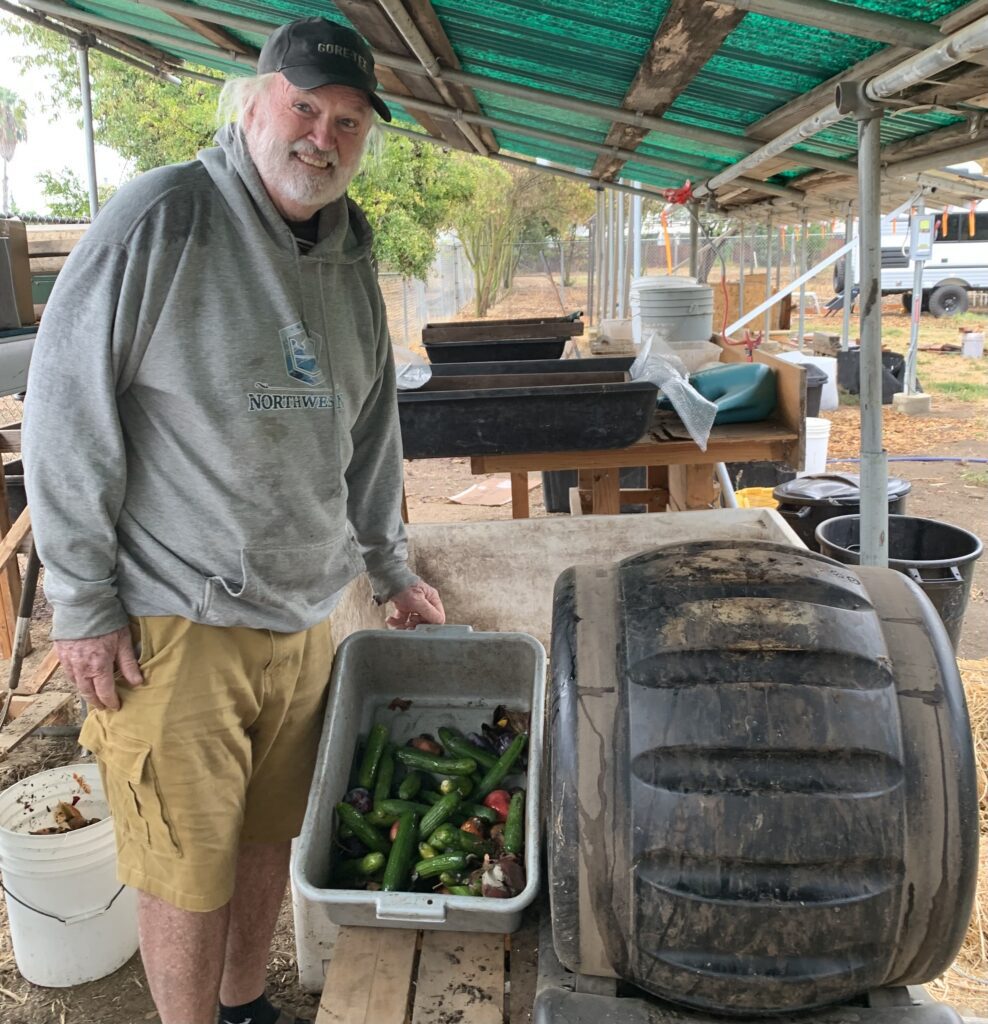
Starting with fruit, vegetables, and mulch
This batch starts with surplus fruit and vegetables, including cucumbers and fruit that are past their best. We combine these ingredients with screened mulch that passes through a ½-inch screen.
The colorful tray of produce shows our starting point. By the end of the process, the material looks very different.
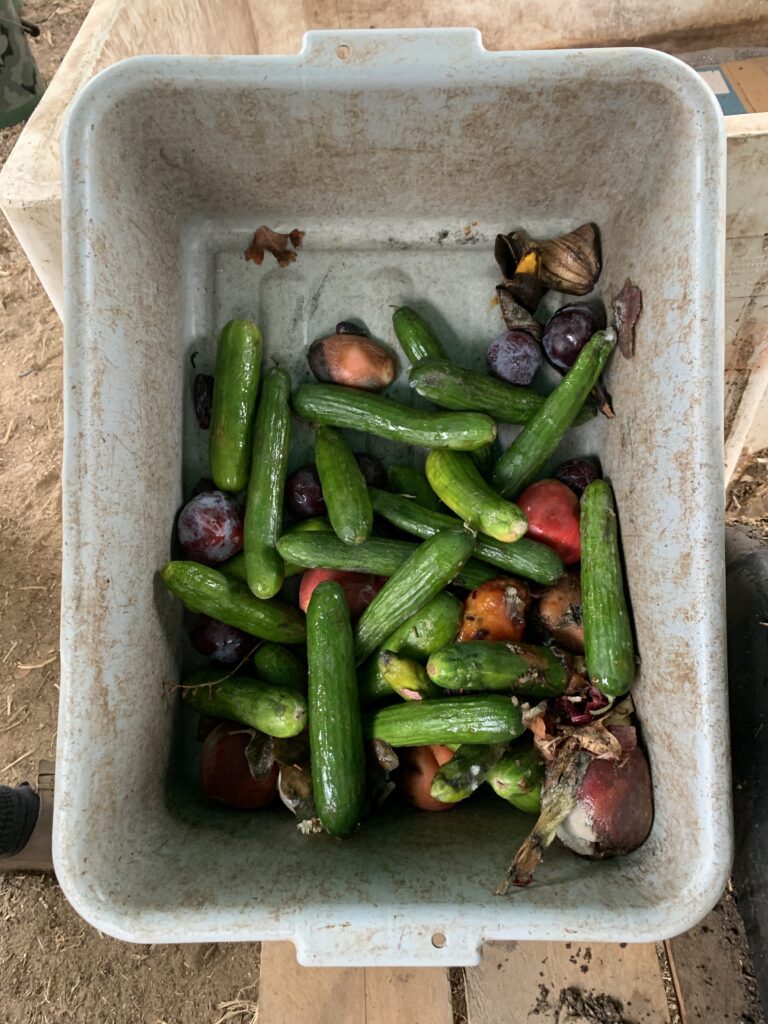
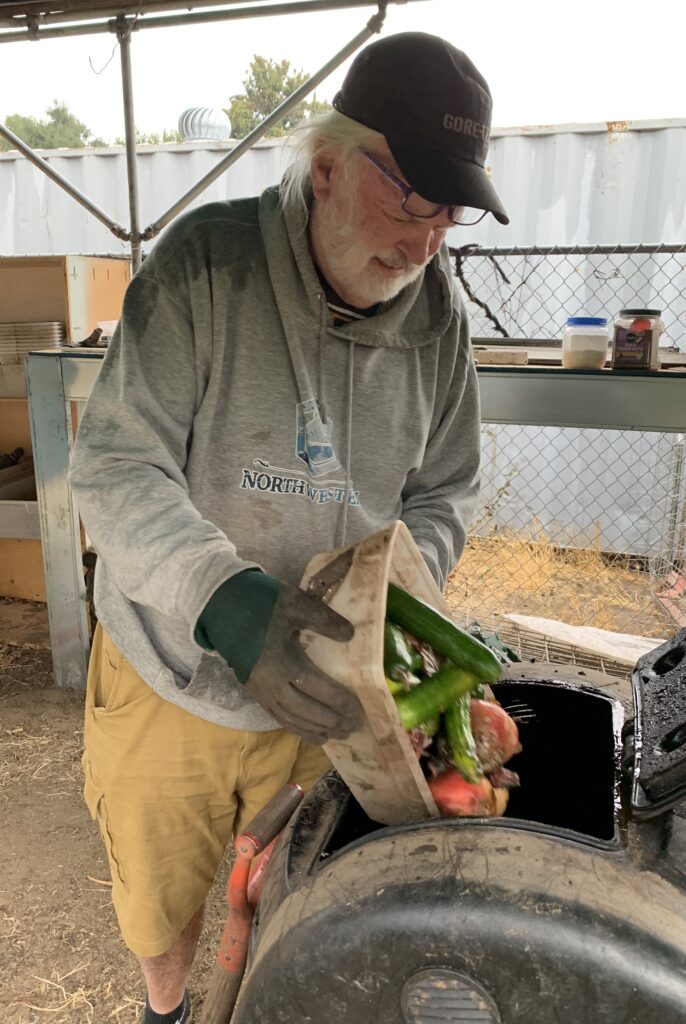
Pre-composting worm food in the tumbler.
We load the ingredients into the compost tumbler and turn it to mix them together. In our system, the material spends about three weeks in the tumbler before we remove it for screening.
This is a preparation stage. We are making feed for the worms; the material coming out of the tumbler is not worm castings.
Removing the material
After its time in the tumbler, the batch has changed from recognizable produce into a darker mixture. Some larger pieces remain, so screening is our next step.
We remove the material and bring it to the screening table.
Screening the worm food
We work the pre-composted material through a ½-inch screen positioned over a collection tray. This separates it into two portions:
- Larger pieces stay on the screen and return to the tumbler for more composting.
- Smaller material passes through the screen and becomes feed for our worm beds.
The close-up video shows how we work the material across the screen and separate the two portions.
Larger pieces get another round
The pieces left on the screen go back into the compost tumbler. They get more processing time before another trip across the screen.
Returning these larger pieces is a regular part of our process.
Feeding the grow-out bed
Now we can follow the screened feed to the worms.
We remove the covers from the grow-out bed, add the feed, and spread it across the surface. Once feeding is complete, we replace the covers.
The tray you see here holds the smaller material collected beneath the screen—the next stop in its journey from food scraps to worm food.
Feeding the breeding bed
The breeding bed receives screened feed, too. We pour it in, spread it across the feeding area, and replace the cover.
Each step has a place in our routine: prepare the ingredients, pre-compost, screen, return the larger pieces, and feed the worms.
The worms take it from here
These photos and videos show how we prepare feed for our worm beds at Delta Worms. The worms take it from here, continuing the process of turning organic material into castings.
Do you prepare your worm food before feeding, or put scraps directly into your bin? We’d enjoy hearing what works for you.