Building Better Grow-Out Beds: Growing the Next Generation at Delta Worms
Building healthy worm grow-out beds is about more than feeding worms and harvesting castings. A dependable worm-growing operation also needs protected environments where the next generation can hatch, grow and mature.
At Delta Worms, that means separating breeding, nursery and grow-out functions as we build a more sustainable production system.
Over the past several weeks, we’ve been developing a system that separates the different stages of worm production. We have a breeding bed where mature worms reproduce, nursery material where cocoons and newly hatched worms can develop, and grow-out beds where juvenile worms have the space and food they need to mature.
It is still a work in progress.
But we’re already learning a lot.
Think of It Like a Cow-and-Calf Operation
One way to understand what we’re building is to think about a traditional cow-and-calf operation.
A cattle producer doesn’t simply sell every animal on the farm. A breeding herd is maintained to produce calves. Those calves are the next generation and the foundation for future production.
We’re applying a similar concept to our worm operation.
Our mature breeding worms aren’t simply pounds of worms waiting to be harvested and sold. Their most important job is reproduction.
They produce cocoons. Those cocoons hatch. The young worms move through nursery and grow-out environments, where they feed and develop. Eventually, some become worms available for harvest while others can become part of the future breeding population.
Our production cycle looks something like this:
Breeding → Cocoons → Nursery → Grow-Out → Mature Worms
The objective isn’t simply to have more worms today.
It’s to develop a system capable of producing healthy worms continuously and sustainably over time.
What Is VermiStart?
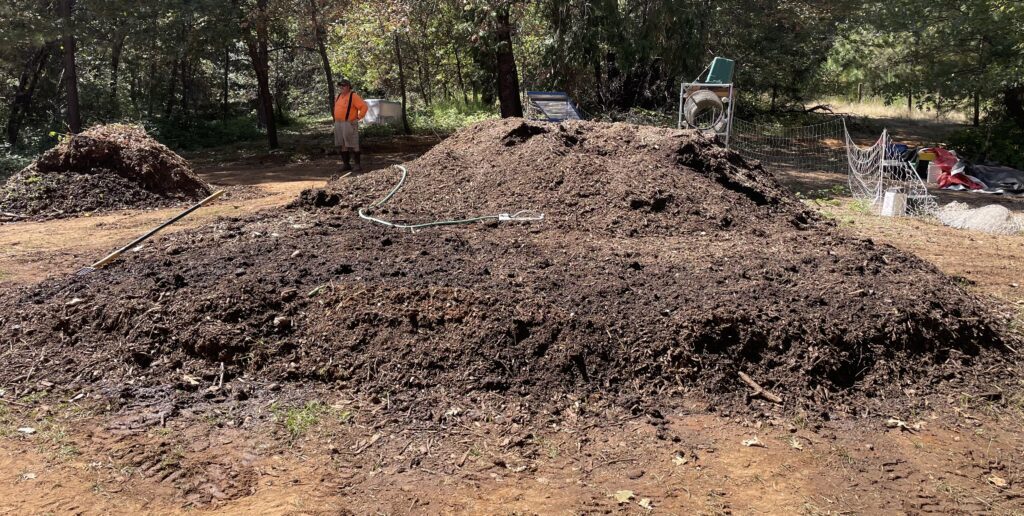
This week, we added another important piece to that system.
I visited our friends at Sweet Earth Worm Farm and brought approximately 75 gallons of VermiStart back to Delta Worms.
So what exactly is VermiStart?
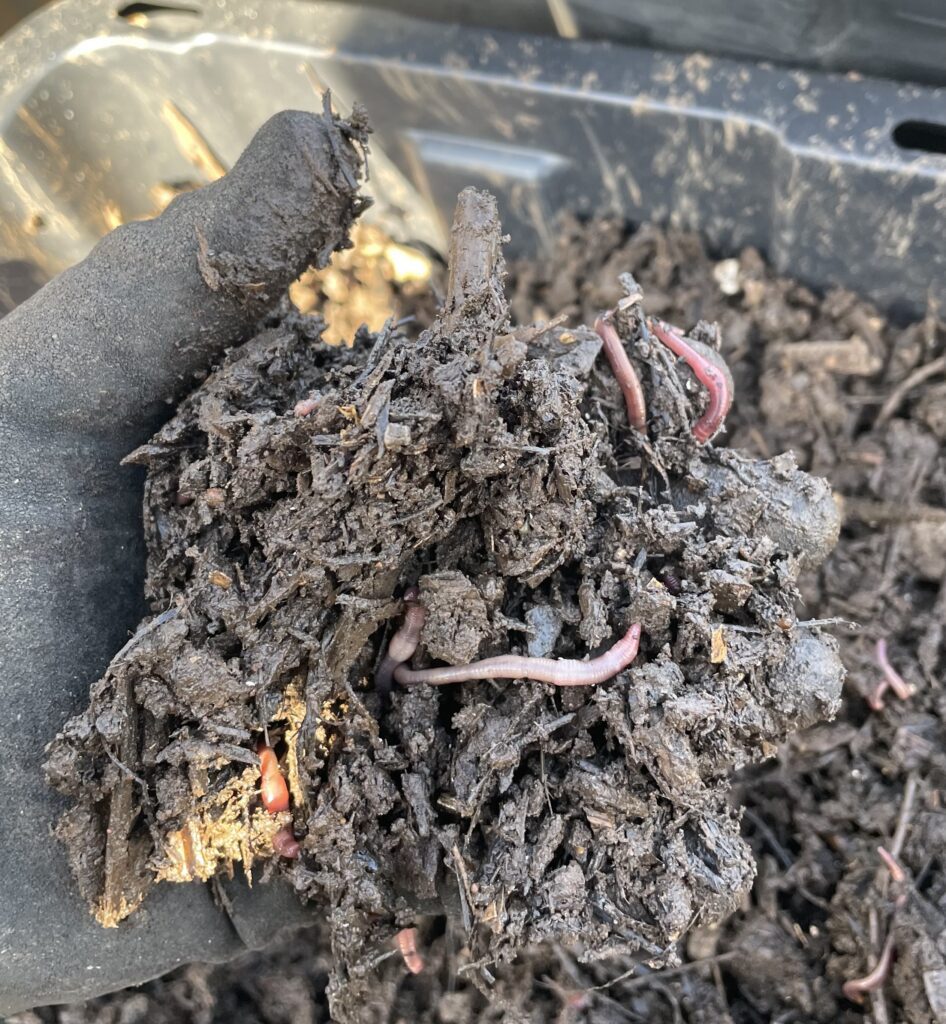
VermiStart is active material taken from an established vermicomposting environment. Unlike finished, screened worm castings, it is a living mixture containing organic material at different stages of decomposition, beneficial microorganisms, worms of different ages and, importantly, worm cocoons.
Think of it as a starter culture for a worm-growing environment.
We’re not bringing this material into Delta Worms to immediately separate, weigh and sell the worms. We want those worms—and especially their cocoons—to remain in the production system. The real value is the living population and biology being introduced into our grow-out beds.
Building Population Instead of Harvesting It
This is an important distinction.
If we added 75 gallons of active worm-bed material and immediately screened out every market-size worm, we would be removing much of what we were trying to establish.
Instead, we’re using the VermiStart to help grow the operation itself.
The worms can continue feeding and growing. The cocoons can hatch. Juvenile worms can mature. Microorganisms can colonize the surrounding bedding.
Over time, we’re hoping that this established biological community helps our grow-out beds develop into productive worm-growing environments of their own.
Just as a livestock producer protects and develops breeding stock, we’re trying to build and protect the biological foundation of our worm population.
The Cocoons May Be the Most Valuable Part
When most people look into a worm bed, naturally they look for worms.
We’re increasingly looking for something much smaller.
Cocoons.
A composting-worm cocoon can easily be overlooked, but it represents future production.
Under favorable conditions, young worms emerge from those cocoons and begin feeding. Those juveniles grow, mature and eventually become reproductive adults themselves.
That’s why we’re interested in much more than how many pounds of mature worms are currently in a bed.
We’re interested in the entire population—cocoons, hatchlings, juveniles and mature adults.
A healthy worm-growing operation needs all of them.
From Breeding Bed to Grow-Out Bed
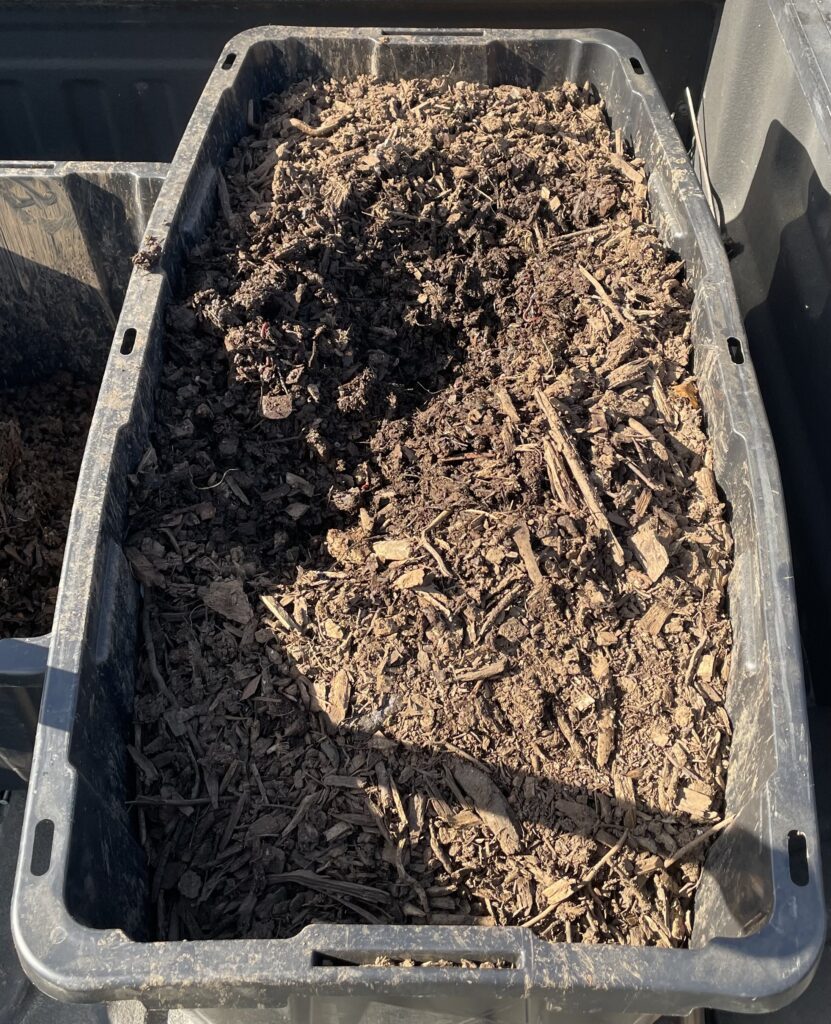
Our breeding bed has a specific job: reproduction.
The grow-out beds have another job: growth.
Separating those functions allows us to manage each environment differently.
In the breeding bed, we’re interested in maintaining healthy mature worms and encouraging cocoon production.
In the grow-out beds, we’re trying to create an environment where large numbers of young worms have adequate space, moisture, biology and food to develop.
Eventually, mature worms can be harvested from the grow-out system without constantly depleting the breeding population.
That’s the direction we’re working toward at Delta Worms.
What Makes a Good Grow-Out Bed?
We’re concentrating on three basic things:
Good Habitat
The bedding needs to remain moist while maintaining enough structure and air space for worms to move through it easily.
Temperature is equally important.
We’ve learned that seemingly harmless organic materials can generate considerable heat as they decompose. That’s why a soil thermometer has become one of the most-used tools around our worm beds.
We check temperatures regularly rather than assuming everything underneath the surface is okay.
We’re also becoming more careful about how we use arbor mulch and other carbon-rich materials. Arbor mulch can be an excellent resource, and we’re fortunate to have it readily available in our area. But fresh woody material can heat as it decomposes, and thick layers can sometimes trap heat underneath.
Good Biology
A productive grow-out bed needs an active biological community. The VermiStart introduces beneficial microorganisms, worms of different ages and cocoons that can populate the surrounding bedding.
Good Food
We’re learning to observe the entire system.
And ultimately, the worms tell us whether we’ve created the right environment.
Better Food for the Grow-Out Beds
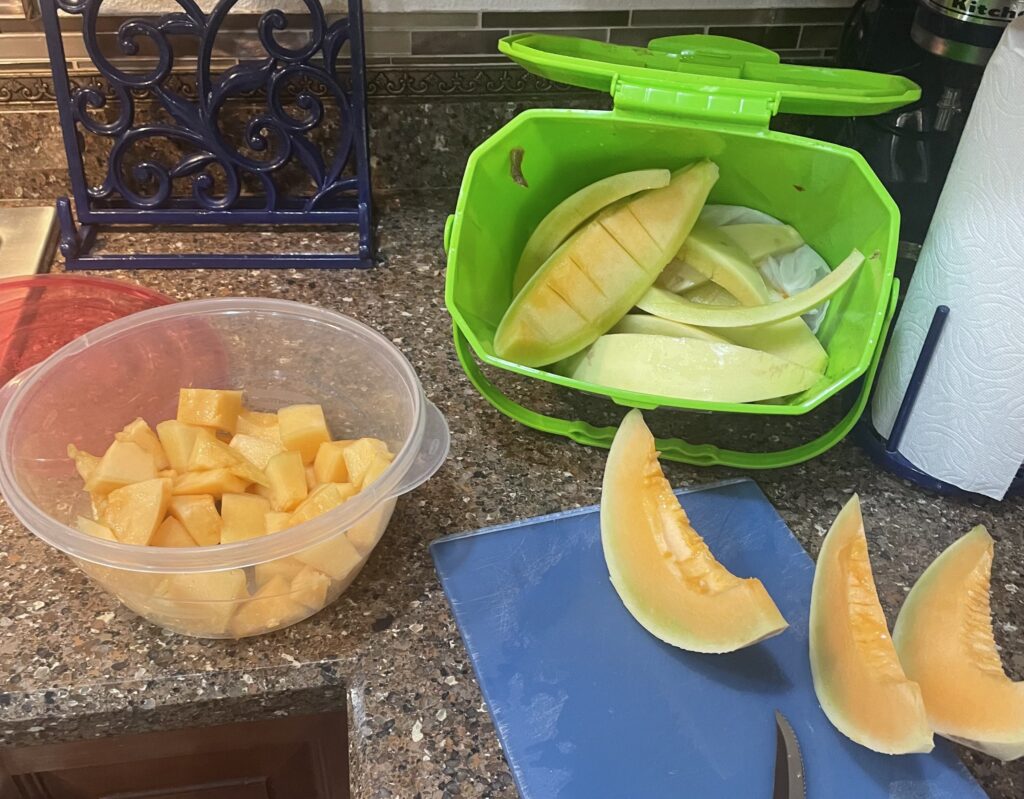
The grow-out beds also connect directly to another experiment underway at Delta Worms: pre-composting worm food.
Rather than putting large quantities of fresh kitchen scraps directly into our production beds, we’ve started pre-composting much of that material first.
This allows the initial decomposition—and much of the associated heating—to occur somewhere other than the worm bed.
Once the material begins stabilizing, we can introduce it gradually into the beds as what we’ve started calling our worm superfood.
This gives us much greater control over feeding.
We’re already seeing encouraging signs. During the first several weeks of developing the grow-out beds, we’ve observed worms increasing in size and appearing vigorous.
That’s an observation, not a controlled experiment.
But it’s enough to keep us interested.
Worm Farmers Learning From Worm Farmers
Our visit to Sweet Earth Worm Farm reinforced something else we’ve come to appreciate.
There is tremendous value in worm farmers learning from one another.
Every operation is different. Feedstocks are different. Climate is different. Markets, equipment and production methods are different.
But we’re all working with the same basic biological processes.
Sharing ideas—and occasionally sharing worms, cocoons and active bedding—helps all of us better understand those processes.
We’re grateful to our friends at Sweet Earth for helping us with this next stage of the Delta Worms experiment.
Now We Watch the Beds
The 75 gallons of VermiStart is now about something much bigger than 75 gallons of material.
It’s about future production.
We’ll introduce the active material into our grow-out beds, continue feeding carefully with our pre-composted worm food, maintain moisture and monitor temperature.
Then we’ll watch.
Are we seeing more juvenile worms?
Are cocoons hatching?
Are the worms gaining size?
How quickly is the food being consumed?
Is the population spreading throughout the beds?
And ultimately, can we develop a system that allows us to harvest mature worms while continually replacing them with the next generation?
That’s the real objective.
At Delta Worms, we’re learning that building a sustainable worm-growing operation isn’t simply about growing more worms.
It’s about building a system that grows the next generation.
And that’s exactly what we’re trying to do.