Bringing a Backyard Garden to Life — One Plant at a Time
When we moved into our new home, our backyard flower garden was still just an idea. We didn’t arrive with just boxes and furniture.
Robin brought more than 100 plants.
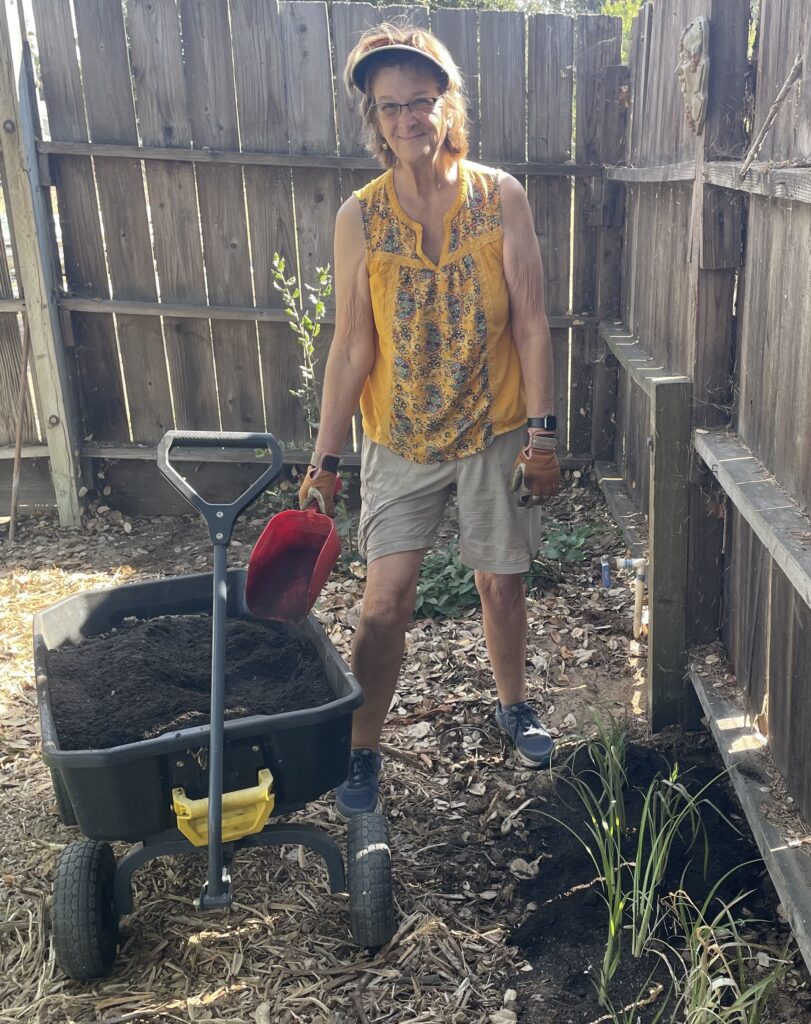
Many of these plants have been with her for years. She has cared for them, moved them, repotted them and kept them going. During our move, they came with us—but getting more than 100 plants properly settled into a new garden doesn’t happen overnight.
For a while, many of them simply found temporary homes around the backyard.
And that’s where this story begins.
Robin’s New Playground — Our Backyard Flower Garden
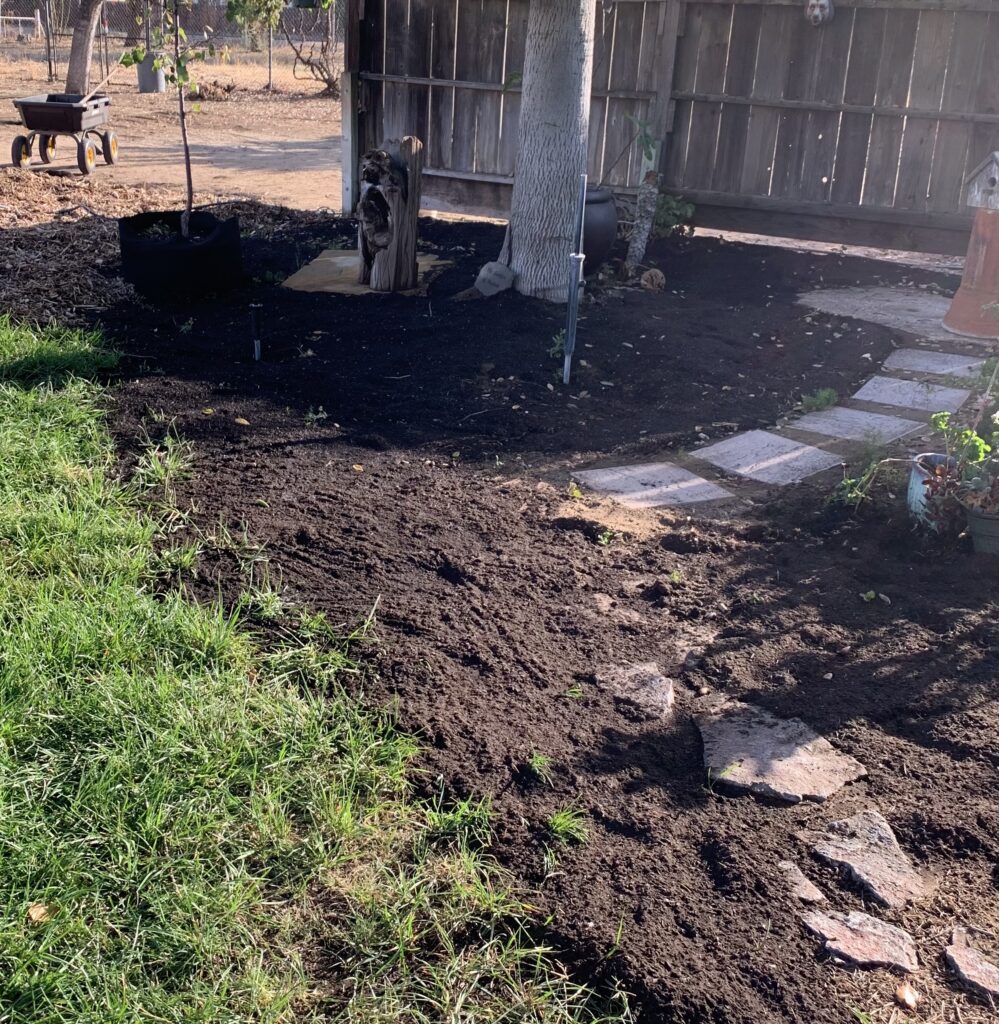
The backyard garden has become Robin’s playground.
She’s the gardener and the artist. She looks at a plant and thinks about where it belongs, what should grow beside it, how the colors and textures work together, and what the garden might eventually become.
I have a somewhat different job.
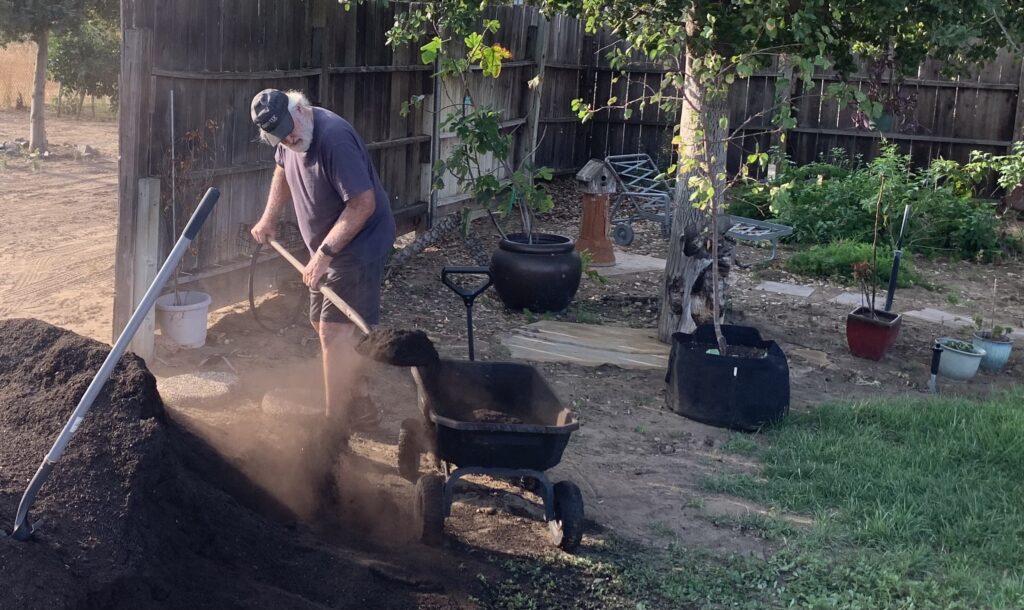
I do the heavy lifting.
That means moving the compost, spreading the arbor mulch, adding worm castings, working on pathways and helping prepare the soil.
If Robin is painting the picture, I’m helping prepare the canvas.
And slowly, we’re beginning to see the picture emerge.
More Than Just Planting
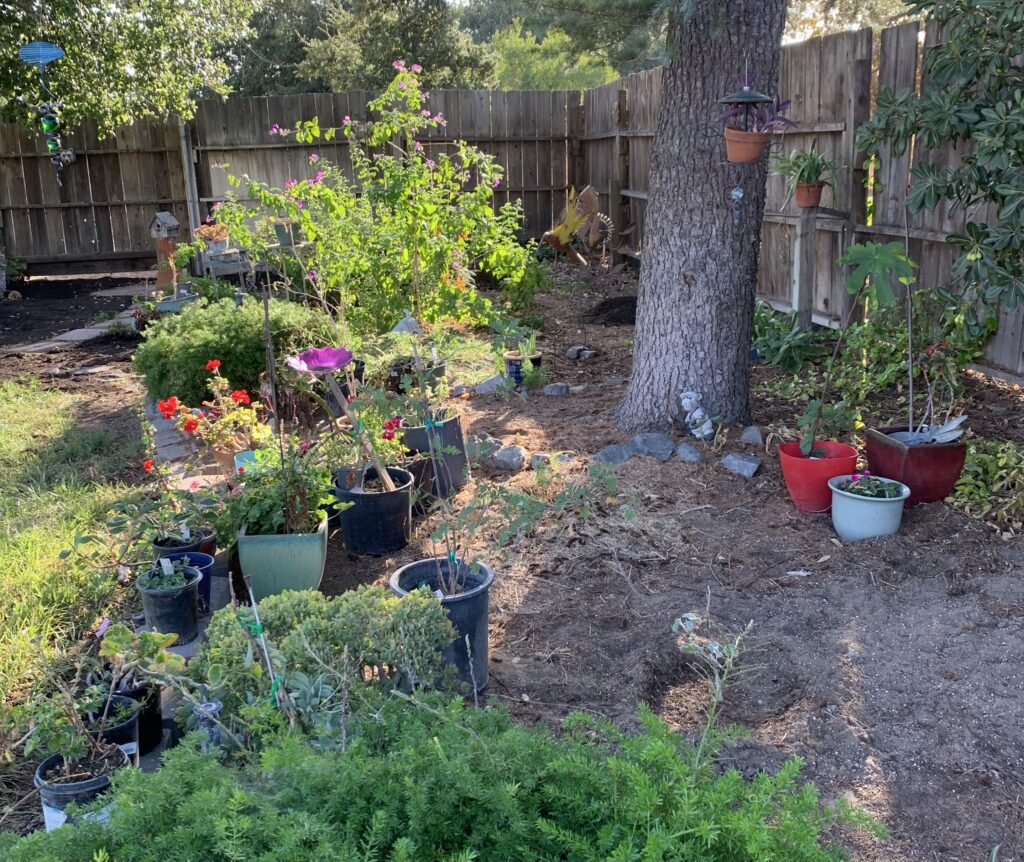
One of the things we’re learning is that creating this garden isn’t simply a matter of digging 100 holes and putting 100 plants into the ground.
Some plants may be in exactly the right place already. Others will probably move—perhaps more than once.
We’re watching the sun and shade, learning where the soil stays moist and where it dries quickly. Over time, we’re also seeing which plants respond well to their new environment.
And underneath all of that, we’re working on the soil.
Compost adds organic matter. Worm castings bring biology and nutrients into the planting areas. Arbor mulch covers and protects the soil while helping us create pathways through the garden.
The pathways have turned out to be particularly important. They give Robin a way to move through the garden, work around the plants and gradually develop individual planting areas without having to finish everything at once.
A Garden Built Over Years
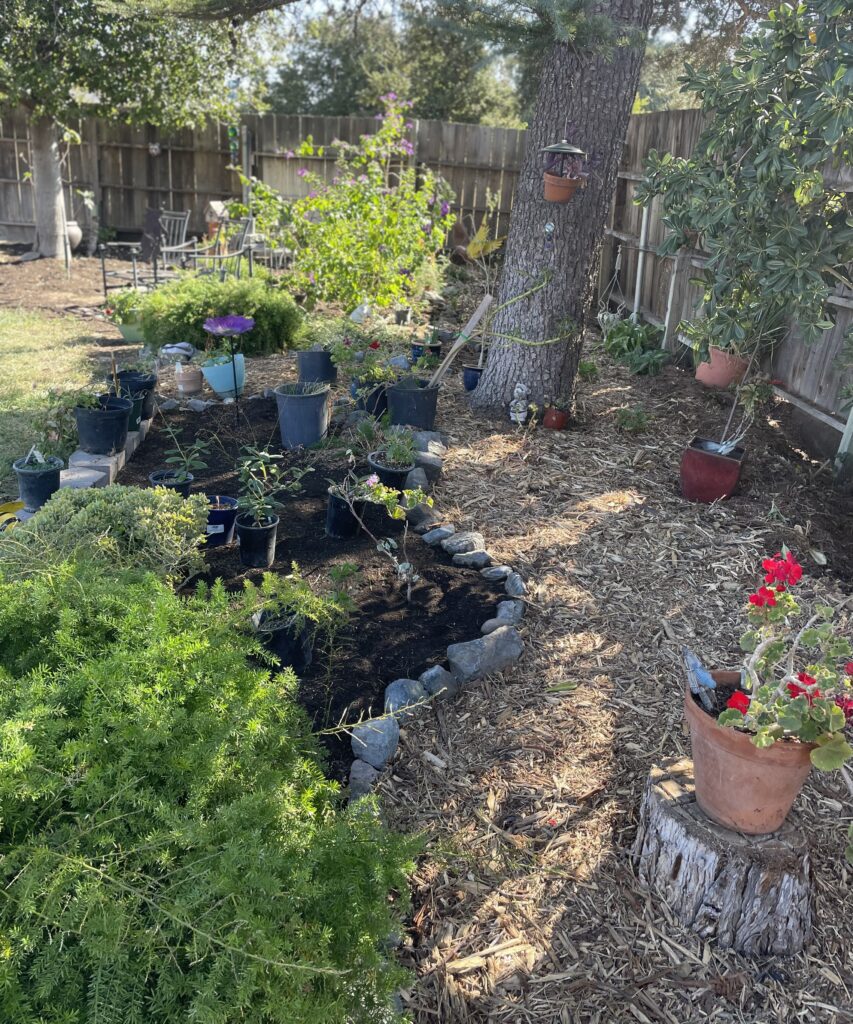
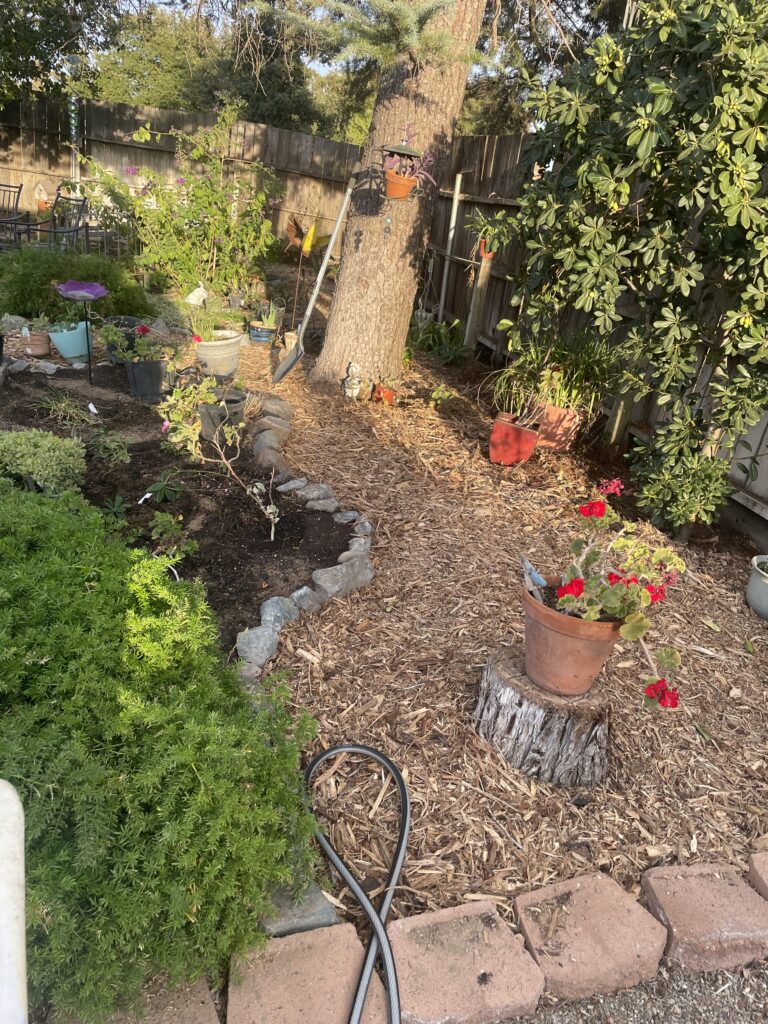
The photographs in our video show progress, but they don’t show a finished garden.
That’s because there isn’t one.
And there probably won’t be for quite some time.
Robin has spent years caring for these plants. Now we’re giving them a permanent garden, and we’re going to give ourselves the time to do it properly.
Some areas will work. Others will change. We’ll add plants, move plants, lose a few plants and undoubtedly discover things we hadn’t planned for.
That’s gardening.
What we’re beginning to understand is that a garden like this isn’t really installed. It’s developed.
And that takes years.
The Artist and the Soil
At Delta Worms, we spend a lot of time talking about compost, worm castings, mulch and healthy soil. Those things matter, but they’re only the foundation.
Robin is the artist in this garden. She has cared for many of these plants for years, and now she finally has a place where she can begin bringing them together.
My job is a little different. I move the compost, spread the mulch, add the worm castings and help build the soil underneath it all.
If Robin is painting the picture, I’m helping prepare the canvas.
Sunday, October 4th, was our 46th wedding anniversary.
We’ll start the day pretty much the way we like to start our days. Robin will be outside tending to her garden, moving plants and thinking about what belongs where. I’ll head over to the worm area to feed and water the worms.
Then we’ll come back together and continue building this place we’ve decided to call home.
After 46 years together, maybe we’ve figured out something about gardens and marriage:
You don’t create either one overnight. You care for them, give them time, make adjustments along the way—and enjoy watching them grow.