Three-Stage Home Composting System: From Kitchen Scraps to Living Soil
A three-stage home composting system produces more stable, biologically active compost while making better use of kitchen scraps and yard waste. Many gardeners believe compost is finished once it leaves the tumbler. In reality, compost continues maturing long after the active heating phase has ended.
Each stage performs a different biological function, and together they create an efficient system for recycling organic materials into healthy, living soil. Each stage prepares the material for the next biological process, creating a continuous flow from food scraps to finished compost.
All stages create the conditions needed for the next, allowing different groups of microorganisms to perform the work they do best.
Stage 1:
Bokashi Fermentation
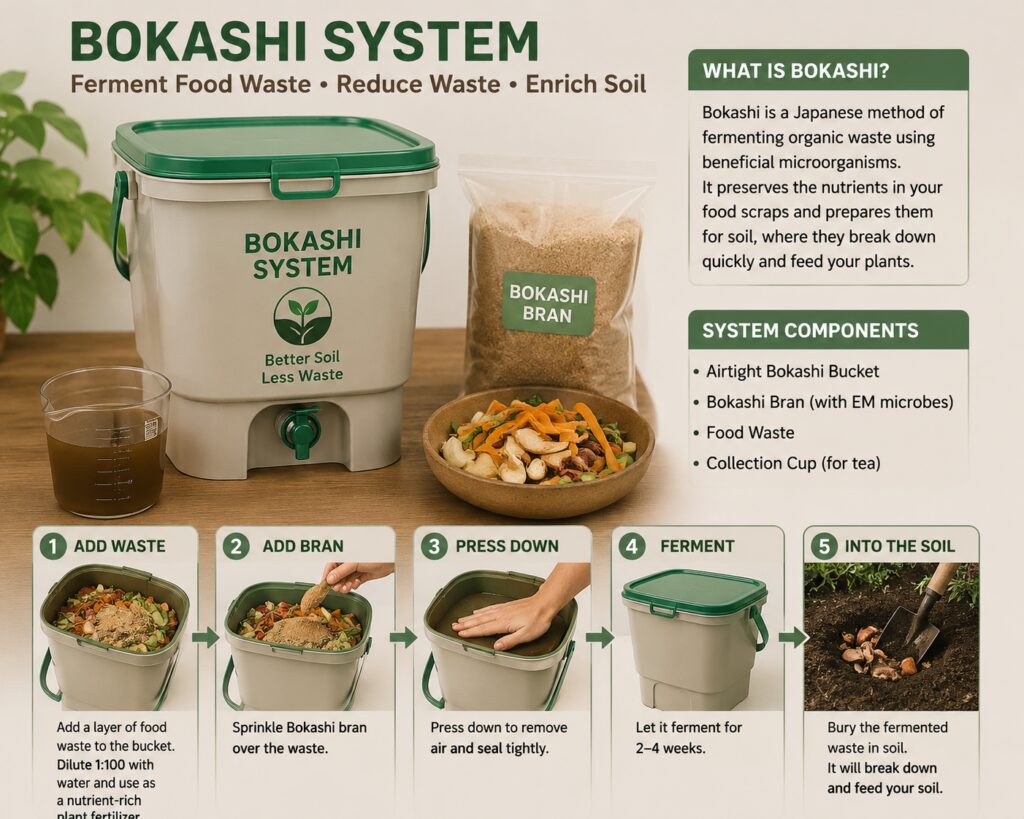
The process begins in the kitchen.
Instead of placing food scraps directly into a compost pile, they are first fermented in a Bokashi bucket using Effective Microorganisms (EM). Unlike traditional composting, Bokashi is an anaerobic fermentation process.
Layer food scraps with Bokashi bran, the lid is sealed, and fermentation occurs for one to two weeks.
During this phase:
- Nearly all food waste can be accepted, including meat, dairy, and cooked foods.
- Little decomposition occurs.
- Nutrients are preserved rather than lost.
- Organic acids suppress odors and discourage pests.
- Bokashi tea can be collected and diluted for use as a soil drench.
This is not finished compost. Instead, the material becomes a nutrient-rich pre-compost ready for aerobic composting.
Stage 2:
Thermophilic Composting in a Compost Tumbler
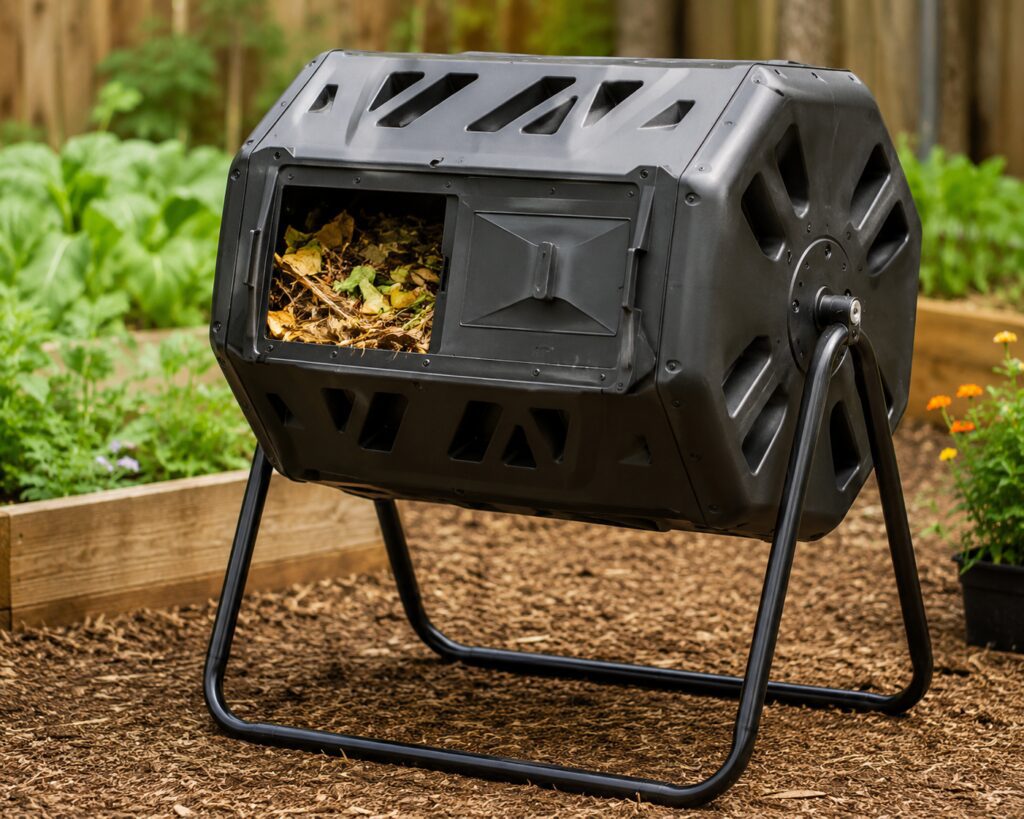
Mix the fermented Bokashi material with carbon-rich materials such as shredded leaves, dry grass, wood shavings, or shredded cardboard before being placed into a compost tumbler.
This begins the aerobic phase.
Oxygen-loving microorganisms rapidly multiply and generate heat.
Properly managed tumblers commonly reach temperatures between 130°F and 160°F, creating what compost professionals call the Pathogen Reduction Phase (PRP).
This stage serves several important purposes:
- Rapidly decompose organic materials.
- Destroy many human and plant pathogens.
- Reduce weed seeds.
- Stabilize easily decomposable organic matter.
The tumbler should be rotated regularly to maintain oxygen levels while keeping moisture similar to a wrung-out sponge.
After approximately two to four weeks, temperatures begin to decline as the easily available food sources are consumed.
At this point, the compost has completed its active phase—but it is still not fully mature.
Stage 3:
Compost Curing with Composting Worms
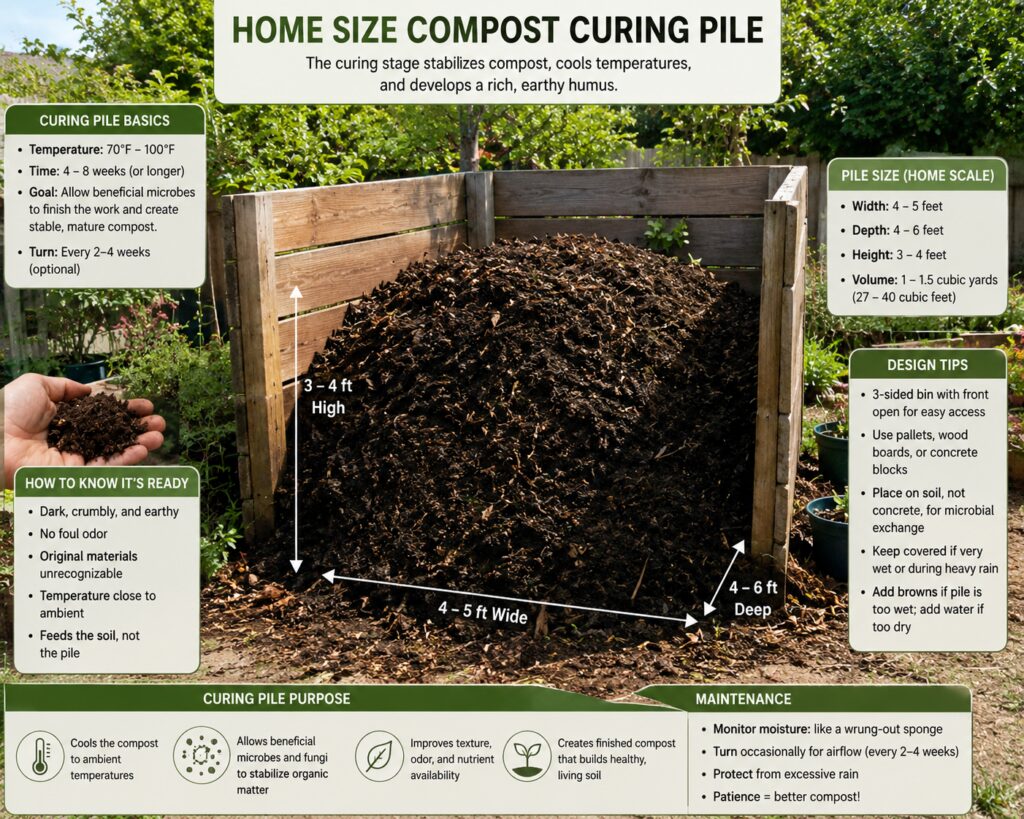
Once the compost cools below approximately 90°F, it enters the curing phase.
This is where many gardeners unknowingly stop too early.
Although the pile may look finished, beneficial bacteria, fungi, protozoa, nematodes, and composting worms continue transforming the remaining organic matter into stable humus.
At this stage, composting worms (Eisenia fetida) can be introduced to further improve the compost.
The worms:
- Consume partially decomposed organic matter.
- Produce nutrient-rich worm castings.
- Improve soil structure.
- Increase microbial diversity.
- Continue nutrient cycling.
Unlike a dedicated worm bin, the curing pile does not rely on worms to perform all decomposition. Instead, worms become one member of a larger biological community that finishes the compost naturally.
The curing pile should remain moist but not saturated and may be turned occasionally to maintain good aeration.
Depending on conditions, curing generally requires four to eight weeks, although longer curing periods often produce even higher-quality compost.
The Result: Living Compost
The finished compost contains stabilized organic matter, beneficial microorganisms, humus, and—when worms are included—valuable worm castings. Together these organisms help support a healthy soil food web.
Finished compost should be:
- Dark brown to black
- Crumbly and friable
- Earthy smelling
- Cool to the touch
- Free of recognizable food scraps
This mature compost feeds the soil food web rather than simply feeding plants.
Why a Three-Stage Home Composting System Works
Each stage performs a different biological function and prepares the material for the next, creating a continuous flow from kitchen scraps to finished compost and ultimately to living soil.
| Stage | Primary Process | Main Purpose |
| 1. Bokashi | Anaerobic fermentation | Preserve nutrients and process kitchen scraps |
| 2. Compost Tumbler | Aerobic thermophilic composting | Rapid decomposition and pathogen reduction |
| 3. Compost Curing with Worms | Biological maturation | Produce stable, living compost rich in beneficial organisms |
Instead of asking, “What compost bin should I buy?” gardeners can begin asking a better question:
“What biological process should happen next?”
Thinking of composting as a complete system—not a single container—results in healthier compost, healthier soil, and healthier gardens.
At Delta Worms, we believe the goal is not simply to make compost.
The goal is to build living soil—one biological stage at a time.