From Kitchen Scraps to Worm Superfood: The Delta Worms Pre-Composting System
Pre-composting worm food turns ordinary kitchen scraps into a safer, more appealing meal for composting worms. Most people think feeding composting worms is simple: collect some kitchen scraps, place them in a worm bin and let the worms go to work.
That approach may work in a small home worm bin, but managing larger breeding and grow-out beds requires more control. Too much fresh food can heat up, become acidic, attract flies or create odors. It can also overwhelm the worms before they have a chance to process it.
At Delta Worms, we are developing a pre-composting system that turns ordinary kitchen scraps and other organic materials into a more stable, biologically active food for our worms. We call it worm superfood.
Why We Pre-Compost Worm Food
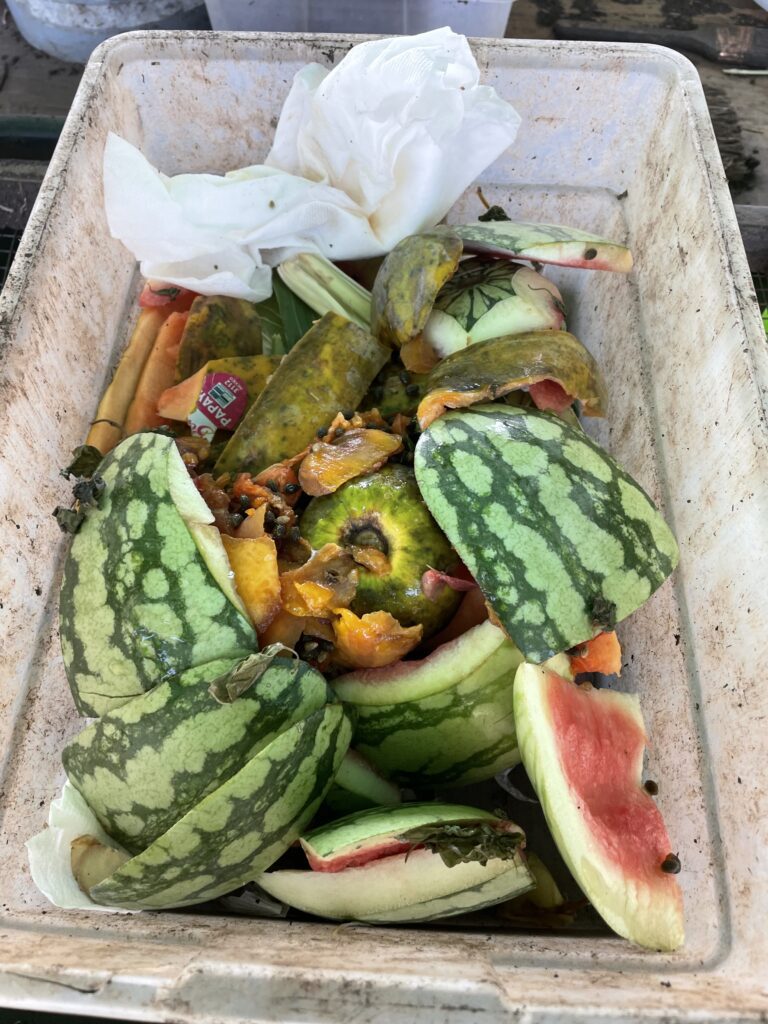
Worms do not actually eat a fresh piece of fruit or vegetable in the same way we do. They feed largely on the microorganisms that colonize organic material as it begins to decompose.
Pre-composting gives bacteria, fungi and other decomposers time to begin breaking down the food before it reaches the worm beds. It softens the material, reduces its volume and creates the microbial activity that attracts hungry worms.
Just as importantly, the heating stage takes place inside the compost tumbler—not in the worm bed. Composting worms prefer moderate temperatures and can become stressed if a large amount of fresh material begins heating around them.
What Goes Into the Tumbler?
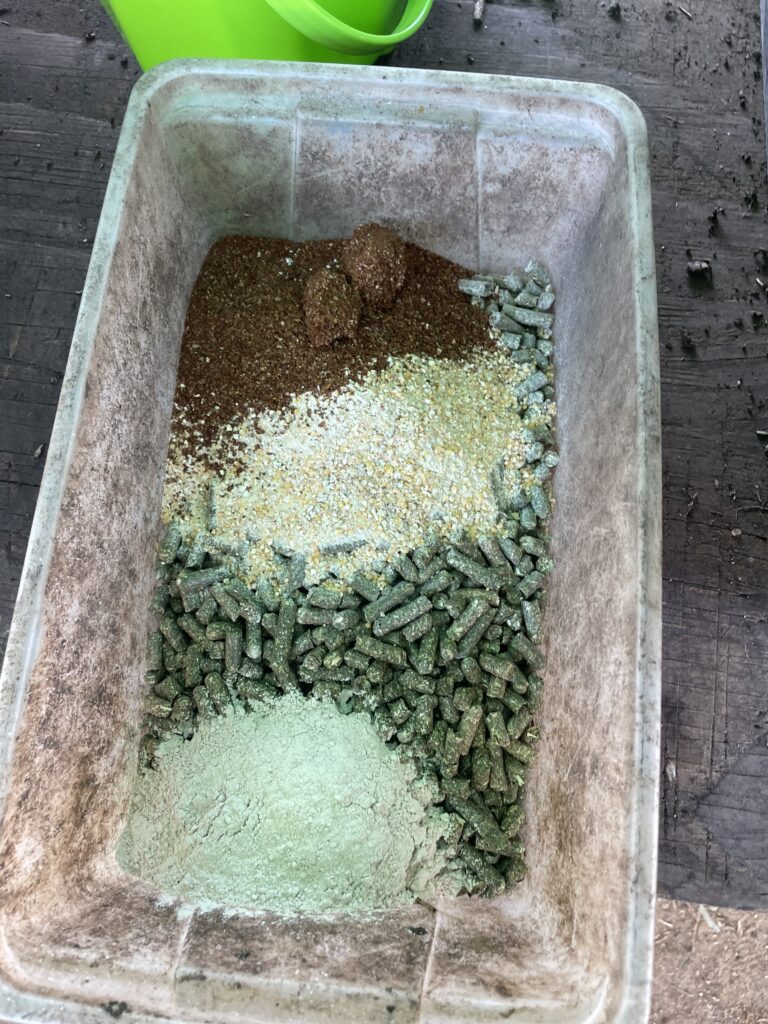
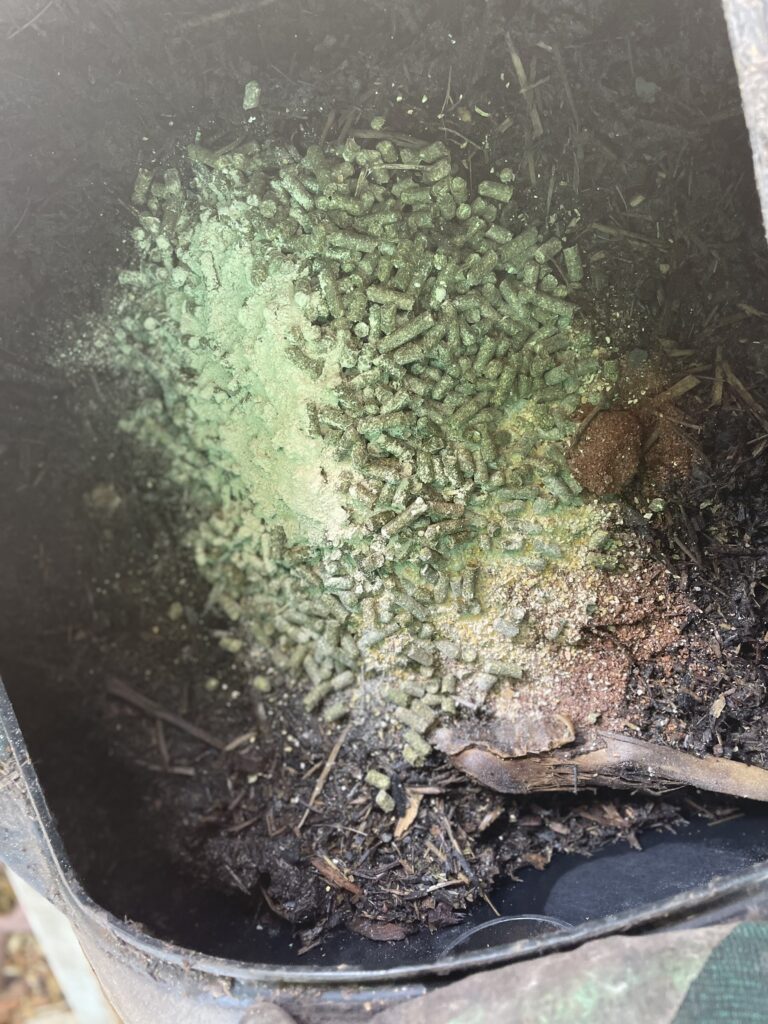
Our current mixture may include:
- Kitchen fruit and vegetable scraps
- Approximately ½-inch screened arbor mulch
- Coffee grounds
- Alfalfa pellets or small amounts of alfalfa hay
- Cornmeal
- Small amounts of mineral amendments, including azomite
- Water, as needed
This is not a rigid recipe. Food scraps vary considerably in moisture and composition, so every batch requires observation and adjustment.
The screened arbor mulch is especially important. It gives the mixture structure, creates air spaces and helps prevent the wet kitchen scraps from becoming a dense, anaerobic mass.
Managing the Pre-Composting Process
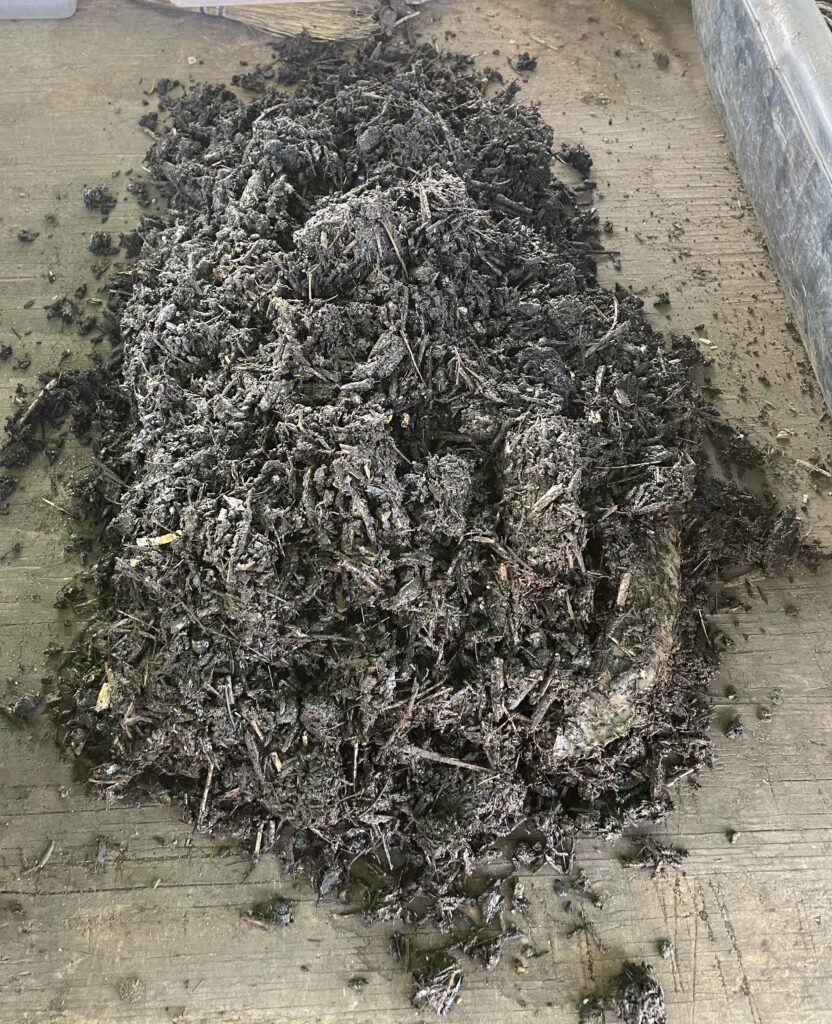
The tumbler is turned regularly to mix the ingredients and introduce oxygen. We also monitor moisture and temperature.
The goal is a mixture that feels damp but not waterlogged. If it becomes too wet, we add more screened arbor mulch or another dry carbon material. If it is too dry, we add a little water.
Temperature tells us how active the decomposition process has become. A warming batch is expected, but we do not want to transfer hot material directly into a worm bed. We allow the initial heating to subside before feeding it to the worms.
Smell is another useful indicator. A healthy batch should have an earthy, fermented or compost-like aroma. A strong sour or rotten odor usually means the mixture is too wet, compacted or short of oxygen.
The Worms Give Us the Final Answer
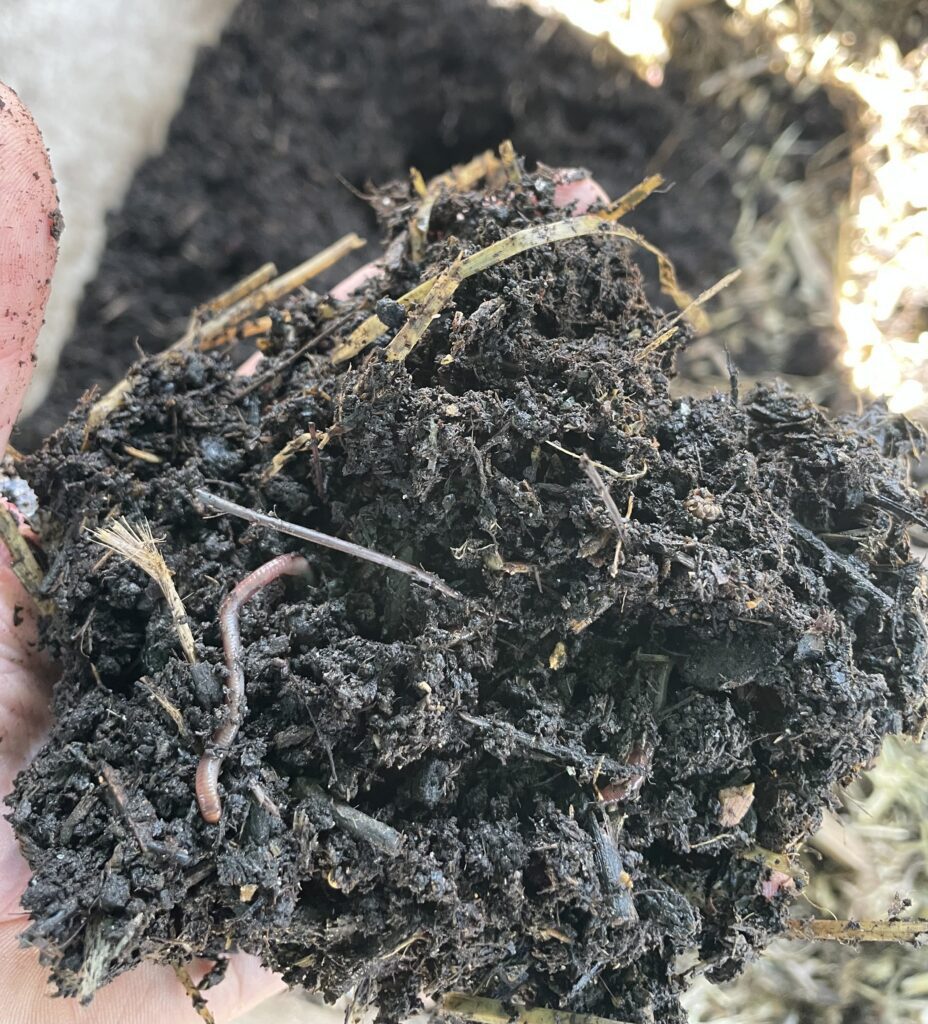
We can check the temperature, moisture and appearance, but the worms are the best judges of whether a batch is ready.
When properly prepared material was recently added to our breeding bed, worms began gathering around it in less than two days. That response showed us that the food was moist, biologically active and appealing to them.
We still introduce each batch gradually through pocket feeding. A portion of the bed is fed while the rest remains undisturbed. This gives the worms room to move away if conditions in the feeding area are not quite right.
After several days, we can inspect the pocket and determine how quickly the food is being consumed before adding more.
Expanding to Two Compost Tumblers
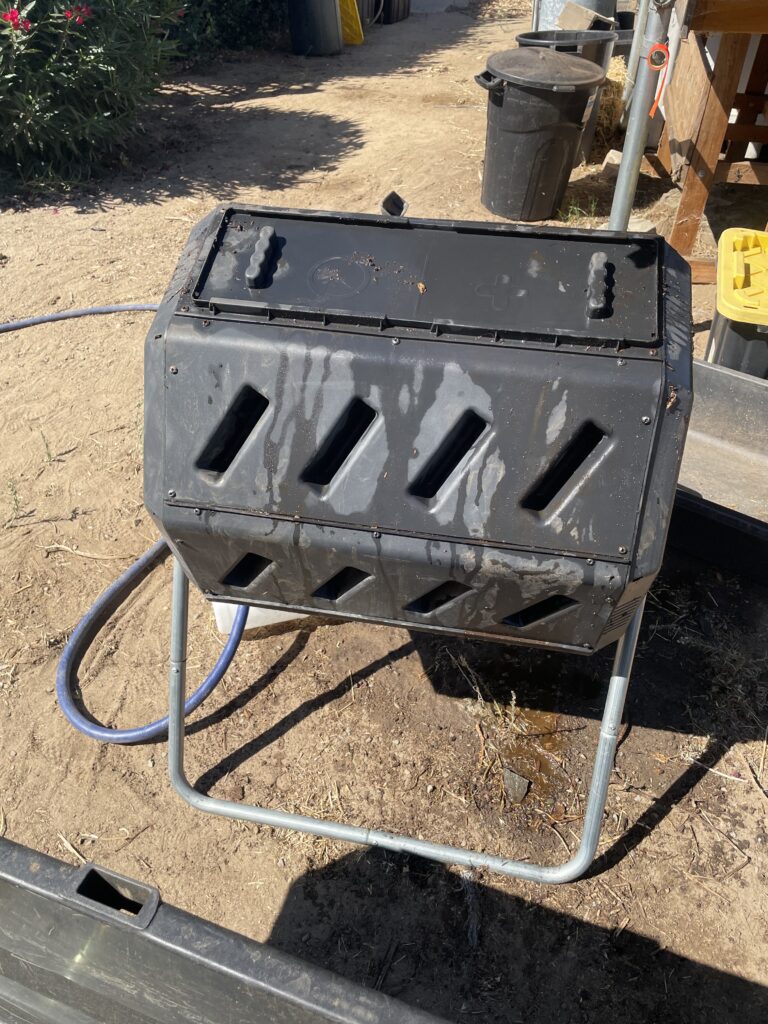
Our original tumbler could no longer produce enough prepared food for the new Delta Worms production system. We now have a breeding bed, two grow-out beds and several holding trays to support.
We recently added a second compost tumbler. The plan is to use one tumbler primarily to prepare food for the breeding bed and the other to support the grow-out beds.
The two-tumbler system also allows us to stagger batches. While one batch is actively heating and decomposing, another can be cooling and moving closer to feeding readiness. This should give us a steadier supply of prepared worm food without rushing the process.
Building a Better Worm-Growing System
Our pre-composting system is still evolving. We are learning from every batch and making adjustments based on temperature, moisture, odors and—most importantly—the response of the worms.
The objective is not simply to dispose of kitchen scraps. It is to create a consistent food source that supports healthy worms, successful reproduction and steady growth.
Pre-composting adds another step, but it gives us much greater control over conditions inside the worm beds. It also connects two valuable biological processes: traditional composting begins breaking down the organic material, and the worms complete the transformation into rich vermicompost.
That is how kitchen scraps become worm superfood—and eventually become a valuable soil amendment for gardens, landscapes and farms.
Follow Delta Worms as we continue building our Oakley wormery and sharing what we learn along the way.
Ready to start recycling food scraps at home? Visit the Delta Worms shop for healthy composting worms.